OBERLIN COLLEGE

Gary Kornblith
History 263
Rice 306; x8526
Fall 2001
E-mail: Gary.Kornblith@oberlin.edu
Blackboard CourseInfo: Amer Civil War/Reconstruction


The American Civil War and Reconstruction

For a regularly updated version of this syllabus, go to http://www.oberlin.edu/history/GJK/H263F2001/.

Less than a century after fighting for independence from Great Britain and establishing a federal republic, Americans turned their firearms on each other in the bloodiest war in the nation's history. At the end of hostilities, over six hundred thousand soldiers lay dead while approximately four million former slaves enjoyed legal freedom for the first time. Thereafter Americans struggled to reorganize their society and redefine their polity in response to the changes wrought by the Civil War's violence and to the conflicts that endured in peace.

This course focuses on three interrelated subjects: the causes of the Civil War; the dynamics of the war and emancipation; and the outcomes of the Civil War and Reconstruction. Beyond coverage of this subject matter, the course is designed to promote three major "student learning objectives":

  • A grasp of important issues, trends, and controversies in recent scholarship on the Civil War and Reconstruction.
  • An understanding of how historians develop interpretations based on research in primary sources and the application of analytic models.
  • A capacity to make independent judgments after careful consideration of available evidence, alternative scholarly interpretations, and an honest reexamination of one's preconceptions and biases.

Throughout the semester, students are expected to draw their own conclusions about the meaning and significance of events that continue to provoke popular passions and intellectual argument more than a century after they occurred.
Format: The class meets regularly on Mondays and Wednesdays from 2:30 to 3:20 p.m. and on Fridays from 2:30 to 4:15 p.m. In general, Mondays and Wednesdays will be devoted to lectures or group discussions of the assigned readings; Fridays will usually involve watching and discussing videos on the Civil War era.

Evaluation: Students will be graded on the basis of class participation, one short position paper (2-3 pp.), two research papers (one 4-5 pp., the other 7-8 pp.), and a final essay (7-8 pp.). The standard formula for determining final grades will be 10% for the position paper, 15% for the shorter research paper, 25% for the longer research paper, 25% for the final essay, and 25% for class participation. The instructor reserves the right to exercise some discretion in assigning final grades.
Revised evaluation formula: 10% for position paper, 15% for shorter research paper, 30% for longer research paper, 15% for final assignment, 30% for class participation.

Purchases: The following books are available for purchase at the Oberlin Bookstore.
Blackboard CourseInfo: To advance the intellectual quality and collaborative dynamics of the class, students are required to contribute substantively at least once per week to online discussions on Blackboard. These contributions will count as part of the "class participation" element in the determination of final grades.

The Coming of the Civil War
Wed., Sept. 5

Introduction

Fri., Sept. 7


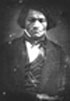
Frederick Douglass

Discussion: The Meaning of Slavery


Mon., Sept. 10

Lecture: The "Two Civilizations" Debate

  • Levine, Half Slave and Half Free, 3-70

Wed., Sept. 12


Oak Alley Plantation

Discussion: The Political Economy of the Old South (Part 1)

  • Genovese, Political Economy of Slavery, 1-69, 157-220, 241-274
  • Eugene D. Genovese, Roll, Jordon, Roll, 3-7, 285-324 (on ERes)
Fri., Sept. 14 Lecture: The Debate over Irrepressibility

Mon., Sept.17


Discussion: The Political Economy of the Old South (Part 2)

  • Fogel, Without Consent or Contract, 15-113, 168-198

Wed., Sept. 19


William Lloyd Garrison

Lecture: Abolitionism, the Second Party System, and the Sectional Conflict


Fri., Sept. 21


Lecture: The Collapse of the Second Party System

Position paper due


Mon., Sept. 24

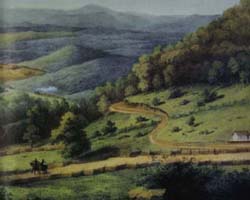
Introduction to The Valley of the Shadow Website


Wed., Sept. 26

Testing the Two Civilizations Thesis in The Valley of the Shadow
(no face-to-face meeting)

Fri., Sept. 28

Online Discussion: The Rise of the Republican Party
(no face-to-face meeting)

  • Levine, Half Slave and Half Free, 71-94, 121-224
  • Eric Foner, "Politics, Ideology, and the Origins of the American Civil War," in Foner, Politics and Ideology in the Age of the Civil War, pp. 34-53 (on ERes)
  • William E. Gienapp in Boritt, ed., Why the Civil War Came, 79-124
  • Fehrenbacher, ed., Abraham Lincoln, 71-77, 81-84, 94-117, 119-128, 132-143


Mon., Oct. 1

Lecture: The House Dividing

Wed., Oct. 3


Walking Tour of Oberlin's Civil War Monuments


Monument to Oberlin participants in John Brown's Raid on Harpers Ferry

Fri., Oct 5


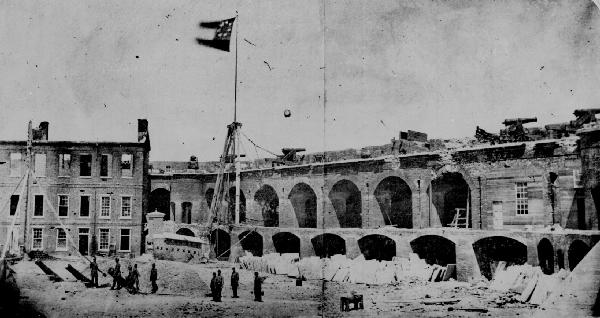
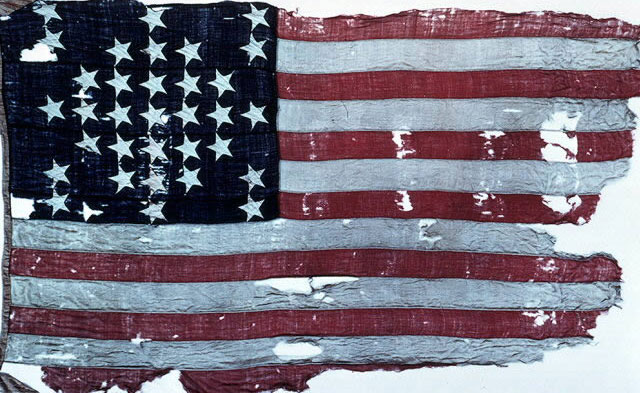
Fort Sumter after surrender

Lecture and Discussion: Secession and the Outbreak of War

  • David W. Blight, "They Knew What Time It Was: African Americans and the Coming of the Civil War," in Boritt, ed., Why the Civil War Came, 51-77
  • William W. Freehling, "The Divided South, Democracy's Limitations, and the Causes of the Peculiarly North American Civil War," in Boritt, ed., Why the Civil War Came, 125-175
  • Fehrenbacher, ed., Abraham Lincoln, 146-170
  • Ordinances of Secession (online at http://members.aol.com/jfepperson/ordnces.html and http://gen.1starnet.com/civilwar/ordmain.htm)


The Civil War and Emancipation

Mon., Oct. 8

Lecture: The Civil War as a Social Process

Wed., Oct. 10


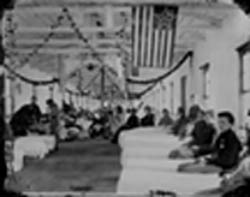
Hospital Ward

Discussion: Why White Men Fought

  • McPherson, For Cause and Comrades, vii-xi, 3-45, 62-130, 163-78
  • Recommended: Gerald F. Linderman, Embattled Courage, 1-16, 61-79, 156-68, 240-65 (on ERes)


Fri., Oct. 12

Video: The Civil War, episode 2


Mon., Oct. 15

Video: The Civil War, episode 3
First research paper due

Wed., Oct. 17

Video: The Civil War, episode 5

Fri., Oct. 19

Video: The Civil War, episode 5 (cont.)


---Fall Break---

Mon., Oct. 29


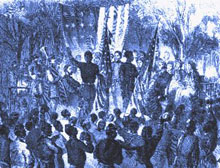
Emancipation Day Celebration

Lecture: The Debate over Whether the Civil War was the "Second American Revolution"

  • Eric Foner, Short History of Reconstruction, 1-54

Wed., Oct. 31

Discussion: The Meaning of Freedom

  • Fehrenbacher, ed., Abraham Lincoln, 176-81, 244-45, 277-79
  • Litwack, Been in the Storm So Long, xi-xiv, 104-66, 221-91, 332-35, 364-425, 472-85

Fri., Nov. 2

Video: Glory


Mon., Nov. 5


Lecture: Online and Offline Resources for Major Research Paper


Wed., Nov. 7

Discussion: The Experience of Defeat

  • Whites, Civil War as Crisis in Gender, 1-159
  • Foner, Short History of Reconstruction, 55-81

Fri., Nov. 9

Video: The Civil War, episode 9

Reconstruction and Reunion

Mon., Nov. 12

Lecture: Origins and Goals of Radical Reconstruction

  • Foner, Short History of Reconstruction, 82-123

Wed., Nov. 14

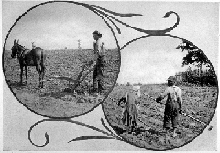
Cotton sharecropping

Discussion: Forces of Progress

  • Litwack, Been in the Storm So Long, 502-56
  • Foner, Short History of Reconstruction, 124-198
  • Roger L. Ransom and Richard Sutch, One Kind of Freedom, 1-13, 56-80, 94-97 (ERes)
  • Tera W. Hunter, To 'Joy My Freedom, 1-3, 21-43 (ERes)

Fri., Nov. 16

Video: Long Shadows

Prospectus for research project due on Blackboard CourseInfo


Mon., Nov. 19

Lecture: Changing Historical Views of Reconstruction

Wed., Nov. 21

Individual meetings to discuss research projects

Fri., Nov. 23 No class

Mon., Nov. 26

Lecture: The Retreat from Reconstruction

  • Foner, Short History of Reconstruction, 199-253

Wed., Nov. 28

Discussion: Forces of Reaction

  • Ransom and Sutch, One Kind of Freedom, 120-25, 149-170 (ERes)
  • Whites, Civil War as Crisis in Gender, 160-224
  • Martha Hodes, "The Sexualization of Reconstruction Politics: White Women and Black Men in the South after the Civil War," Journal of the History of Sexuality 3 (1993): 402-417 (on ERes)

Fri., Nov. 30

Video: Birth of a Nation


Mon., Dec. 3

Student Presentations of Research Projects

Wed., Dec. 5

Student Presentations of Research Projects

Fri., Dec. 7

Student Presentations of Research Projects


Mon., Dec. 10

Lecture: Long-term Consequences of the Civil War and Reconstruction

Second research paper due

Wed., Dec.12

Discussion: Reconstruction in Comparative Perspective
  • Foner, Short History of Reconstruction, 254-60
  • Thomas C. Holt, "'An Empire over the Mind': Emancipation, Race, and Ideology in the British West Indies and the American South," in J. Morgan Kousser and James M. McPherson, eds., Region, Race, and Reconstruction, 283-313 (on ERes)
  • Steven Hahn, "Class and State in Postemancipation Societies: Southern Planters in Comparative Perspective," American Historical Review, 95 (Feb. 1990): 75-98 (on JSTOR)
  • Stanley Engerman, "The Economic Response to Emancipation and Some Economic Aspects of the Meaning of Freedom," in Frank McGlynn and Seymour Drescher, eds., The Meaning of Freedom, 49-68 (on ERes)
Fri., Dec. 14

Video: Presenting Mr. Frederick Douglass


Tues., Dec. 18

Final assignment due