Tuesday, Thursday 1:00-2:45 PM
Classroom: King 335
Mr. Volk
Office: Rice 309
Office Tel: x58522
Email: steven.volk@oberlin.edu
Office Hours: Mon 1:30-2:30; Tues 3:00-4:00; Wed 11:00-Noon
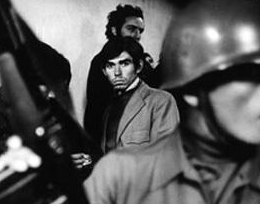
(David Burnett, National Stadium, Santiago, Chile, September 1973, Contact Photos)
In his very useful introduction to the concept of "rights" (which we will be reading), Tom Campbell argues that as critical philosophy, the study of rights can be broken down into five themes: (1) what are rights? (2) who can have them? (3) what are the rights that they can have? (4) are these sufficient, or are we deserving of other rights? and (5) how do we best secure the rights we already have?
This seminar accepts those as basic questions, but places them within an historic (i.e., continually changing) framework, not just a philosophical one; and, in so doing, regroups these questions into two larger questions. By focusing on "human rights" (and the wrongs of which human seem endlessly capable), I intend to focus on the historical (rather than biological) question of "humanness". While the concept that humans are inviolable (i.e., that rights adhere to their very humanness) is an ancient one, even if it is more observed in the breech, the question of who is human - and therefore deserving of rights - has been contested for millennia. This may seem odd, even quaint or pathetic - but it is useful to remember that in 2006 we are still debating what it is that separates humans from our closest non-human cousins. Don't forget, we are only a little more than two centuries removed from the drafting of the U.S. Constitution which, for census purposes, established that slaves would be counted as "three-fifths of a Person" [Article 1, section 2]. So we should not find it very surprising that when the Spanish first arrived in what was to them a "New World," they formally debated the ontological status of the "life forms" they encountered there. In this first framework, therefore, we will discuss the relationship between humans and rights and the questions which arise as to who is human and why it is that only humans are universally recognized as rights-bearing.
Yet even if human status is granted as that most appropriate for the reception of rights, the question of which "rights" are inherent to humans has, as well, been hotly debated. The modern (Western) conception of the "rights-bearing individual" is linked to Liberal political thought which emerged in the late-17th and 18th century European Enlightenment. The "Enlightenment" (a simple title for a complex process which generated notions of liberty, individualism and consumption which are still dominant today) articulated a concept of inviolable political and civil rights, a major advance in the concept of human freedom. And yet, this period (along with many of the thinkers associated with it) was also tightly bound to the spread of colonialism, the growth and maturation of the trans-Atlantic slave trade, and the continued disenfranchisement of women. In that sense, to imagine a human being with "inherent" rights does not really answer the question either of what rights are inherent nor does it address the struggles which must be undertaken before those rights are secured.
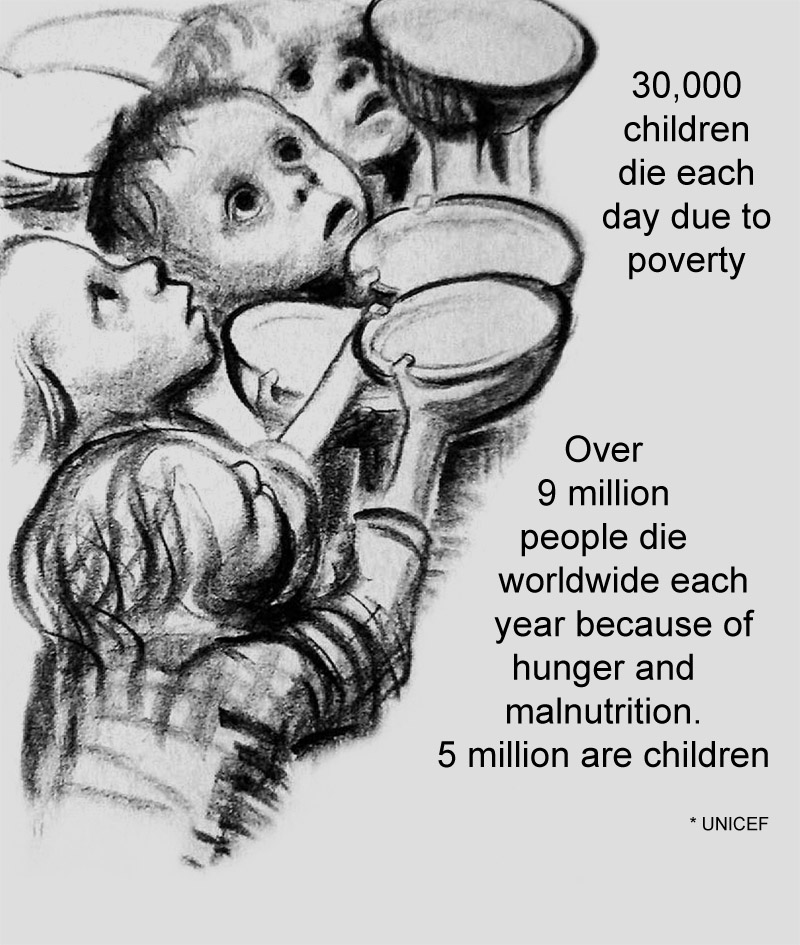
And what are those rights? Life, liberty, and the pursuit of happiness (the U.S. Declaration of Independence, 1776)? Liberty, property, security, and resistance to oppression (the French Declaration of the Rights of Man, 1789)? The right to a standard of living adequate for the health and well-being, including food, clothing, housing and medical care and necessary social services, and the right to security in the event of unemployment, sickness, disability, widowhood, old age or other lack of livelihood (Universal Declaration of Human Rights, 1948)? Genocide has been legally proscribed in our post-Holocaust world, but an estimated 30,000 children starve to death each day and 3 billion people have no access to sanitation.
Given that history is a study of change (or continuity) over time, in this class we'll focus on the difficult "edges" of the rights discussion, suggesting how historians (and others) conceive of rights, and how these have changed over time. Using historical frameworks, we'll discuss where rights come from historically, where they begin and end, and why new rights are added to a bundle of "inherent" rights. Finally, lest anyone think that a historical discussion of rights is a discussion of the inevitable accretion of more and more rights, we'll focus on how now widely recognized rights fair during times of heightened political conflict (e.g., the "dirty wars" period in South America or the current "war on terror" in the United States, a country which has prided itself on its historic affiliation with the most liberal of all rights regimes).
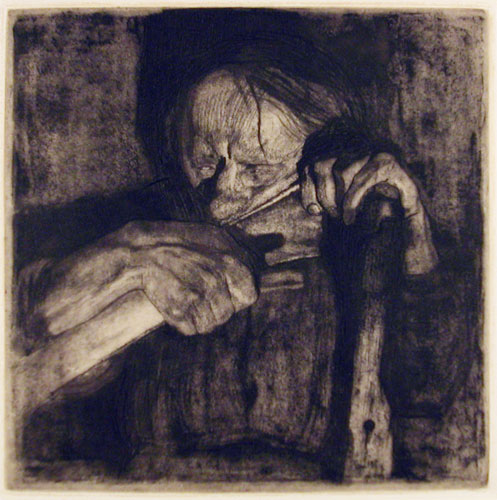
| Kathy Kollwitz, Biem Dengeln, 1921, etching |
Course Requirements and Grading Policy:
1. The primary requirement is attendance. As a seminar, this class will run largely through your participation. If you are not in class, you can't participate. While I expect that most of you will miss a few classes because of illness or other acceptable reasons, more absences than this will result in a lower grade. Please see me if you find yourself in that situation.
2. You are required to complete the assigned readings before the class meets. The syllabus is clearly marked as to what readings are assigned for each week. I will inform you as to which of those must be read for the Tuesday class, and which for the Thursday.
3. Papers and other assignments: For this class, you - the students - will decide on the assignments, due dates, and grading policies. There are a few general guidelines that you will need to observe (e.g., this is a writing certification course so a fair proportion of the assignments should be papers rather than, say, exams; the deadline for the final assignment is set by college policy and cannot be changed, etc.), but otherwise you will decide on assignments.
Here are some points to think about: (1) Types
of assignments (papers, oral presentations, group presentations, debates, etc.);
(2) Content of assignments (what topics; how long should the papers be; drafts
and final papers; research assignments, historiographical papers, position papers,
etc.); (3) Number of assignments and scheduling: how many assignments and when
should they be due?; (4) Grading policies: How do you think late papers should
be dealt with? What, do you think, are the most important factors that I should
look for when grading your assignments? If you have group projects, how should
grades be determined for group members? How should assignments be weighted (e.g.,
all equally, each project worth a higher percentage of the final grade, a final
project which accounts for a significantly larger percentage of the final grade
than the others, etc.).
We will discuss all these issues during the first week of class and, at the
start of the second week, you will be given a final syllabus with all the assignments
scheduled in.
4. Class Tutor: Your class tutor is Emma Rubin, a senior Comparative American Studies major. She'll be introduced in class and will be available to help you with your written assignments during the semester.
The Honor Code:
Oberlin College operates on the honor system, which means that "Students are on their honor to do their own work." The full Honor Code is linked here. It will provide definitions of "cheating," "plagiarism," "fabrication," and other violations, as well as how the Honor Code System is administered, your rights and responsibilities. We will discuss this in class, as well as the overall purpose of the Honor Code, but you should know two things clearly: (1) you are responsible for doing your own work. I will let you know when collaboration on projects is permissible, and we will explore the difference between discussing ideas for papers or other projects with your classmates, Emma, or others (permissible and even encouraged) and submitting work that is not your own (not permissible). (2) Faculty are required to report violations of the Honor Code. This is not a matter of choice.
Books Recommended for Purchase:
NOTE: There will be one copy of each of these recommended books on reserve in the library. They will not be available on ERes. The books can be purchased from the Oberlin Bookstore or, alternatively, from an on-line bookseller where the prices could be less (particularly on used copies). Any book recommended for purchase will be used extensively in the course (i.e., we will read all or most of the book). Finally, you can always get copies of the books from OHIOLINK.
Tom Campbell, Rights: A Critical Introduction (NY: Routledge), 2006.
Micheline R. Ishay, The Human Rights Reader. Major Political Essays, Speeches, and
Documents from the Bible to the Present (NY: Routledge), 1997.J.M. Coetzee, The Lives of Animals (Princeton: Princeton University Press), 2001.
Kazuo Ishiguro, Never Let Me Go, reprint ed. (NY: Vintage), 2006.
Karen J. Greenberg, ed., The Torture Debate in America (NY: Cambridge), 2006.
Getting Class Materials:
There are a variety of ways to get materials for class:
(1) Books. It is recommended that you purchase the books listed above; they are available at the Oberlin Bookstore and from on-line booksellers. One copy of each book which is "recommended for purchase" is also on reserve in the Reserve Room at the library as is one copy of books from which a lot of reading is assigned (but aren't recommended for purchase). You can often get these books from other institutions via OHIOLINK. Books ordered in this fashion usually take 3-5 days to arrive, sometimes longer, so don't wait until the day before they are to be discussed in class to order them. Plan ahead.
(2) Articles. These are available in three formats:
a. Print Reserves: Two copies are in the Reserve Room at the library.
b. ERes: One copy of almost all of the articles is on Electronic Reserve. This can be accessed by going to the library's home page, going to "Course Reserves," and clicking on ERes. From there, click on "Electronic Reserves and Reserves Pages" . At that point you can either enter the course number (FYSP175); course name (Human Rights), my name or the department (FYSP). Click on the course number, and it will ask for a password. That's the course number in lower case: fysp175. From there, just click on the article you wish to read, and it will open in pdf format.
c. A small number of documents are only available from the "Course Documents" section on Blackboard. Once you enter Blackboard, you will need to have a password to login (we'll discuss this in class), but once you do, you will be able to access this course (once you are registered for it), and by clicking on "Course Documents," you will find the documents for this class located there.
Things do go wrong with these systems (or, as well, I might have forgotten to put one of the readings on), so let me know quickly if you can't find or can't access something that's required reading for the course.
Syllabus
[Please note that all assignments and their due dates will be added once decided upon by the class -- see above]
Part I: What are rights? Where do they come from? Distinguishing "rights" from "right": Philosophical and Historical Approaches
Sept. 5: Introduction to the course
No assigned reading.
Sept. 7, 12: Defining the concept of rights; developing a common vocabulary. How do philosophers think about the notion and nature of rights?
Tom Campbell, Rights: A Critical Introduction (NY: Routledge), 2006: Preface, Chapters 1,2 (pp. 3-42);
Jack Donnelly, "Introduction: Being Right and Having a Right," and "The Nature of (Human) Rights: 'Having' a Human Right," in The Concept of Human Rights (NY: St. Martin's Press, 1985), pp. 1-26. [ERes and Regular Reserve].
Sept. 14, 19: The definition of rights as historically contextualized: Rights from the ancient world to the European (Christian) Middle Ages.
From Micheline R. Ishay, The Human Rights Reader. Major Political Essays, Speeches, and Documents from the Bible to the Present (NY: Routledge, 1997): Part I (Religious Humanism and Stoicism), Chapters 1-11.
Sept. 21: First draft, analytic paper on rights (3-5 pages), due at start of class.
Sept. 21, 26, 28: The New World challenge
(Jean de Léry, Histoire d'un voyage fait en la terre du Bresil, autrement dite Amerique... (Geneva: Eustache Vignon), 1594)
Excerpts from: Bartolomé de las Casas, Apologetic and Summary History Treating the Qualities, Disposition, Description, Skies and Soil of These Lands; and the Natural Conditions, Governance, Nations, Ways of Life and Customs of the Peoples of These Western and Southern Indies, Whose Sovereign Realm Belongs to the Monarchs of Castile. [SEPTEMBER 21]
Ishay, The Human Rights Reader, Chapter 12 (Las Casas). [SEPTEMBER 21]
Anthony Pagden, The Fall of Natural Man: The American Indian and the Origins of Comparative Ethnology (Cambridge: Cambridge University Press, 1982), pp. 1-108. [ERes and Regular Reserve]. [NOTE: RESPONSE PAPER ON PAGDEN DUE ON SEPTEMBER 26] [SEPTEMBER 26]
David Byron Davis, "At the Heart of Slavery," New York Review of Books , Oct. 17, 1996. [COURSE DOCUMENTS] [SEPTEMBER 28]
October 5: Final draft, analytic paper on rights (3-5 pages), due at start of class.
Oct. 3, 5: Liberalism, the "Enlightenment," and the origins of the modern Western rights system
Ishay, The Human Rights Reader, Part II. [OCTOBER 3: CHAPTERS 1-9; OCTOBER 5: CHAPTERS 10-18]
Part II: Human Rights in the Contemporary Era: Who
Can Have "Modern" Rights and What Rights Do We "Get"
Oct. 10, 12: Who gets rights? Exploring modern boundaries
Tom Campbell, Rights: A Critical Introduction, Chapter 3. [NOTE: No class October 10 - read Campbell for October 12]
J.M. Coetzee, The Lives of Animals (Princeton: Princeton University Press), 2001. [NOTE: RESPONSE PAPER ON COETZEE DUE ON OCTOBER 12] [OCTOBER 12]
Martha Nussbaum, "The Moral Status of Animals," New York Review of Books, Feb. 3, 2006. [COURSE DOCUMENTS] [OCTOBER 12]
NEW DATE: Oct. 26: First draft, research paper (8-10 pages), due at start of class. Topic to be assigned
Oct. 24, 26: Political and legal (civil) rights
Tom Campbell, Rights: A Critical Introduction, Chapters 5 [Oct. 24], 7, 8 [Oct. 26]
Oct. 31, Nov. 2: Economic/sustenance rights
Tom Campbell, Rights: A Critical Introduction, Chapter 9 [Oct. 31]
Ishay, Human Rights Reader, Appendix, Nos. 3, 8, 13, 14.[Oct. 31]
Ishay, Human Rights Reader: Part III (Chapters 1, 4, 6, 9, 11) [Nov. 2]
(UNICEF poster)
Nov. 7: Final draft, research paper (8-10 pages), due at start of class.
Nov. 7, 9: Where do rights end? The Limits of Autonomy
Kazuo Ishiguro, Never Let Me Go, reprint ed. (NY: Vintage), 2006. [Begin Ishiguro Nov. 7, finish by Nov. 9]
[NOTE: RESPONSE PAPER ON ISHIGURO DUE ON NOVEMBER 14]
Part III: Human Rights Globally Conceived: Self-Determination, Colonialism, Imperialism, Relativism, Intervention, Global Human Rights Regimes
Nov. 14, 16, 21: Universalism, Relativism and International Human Rights Practices
Campbell, Rights: A Critical Introduction, Chapters 6, 10. [Nov. 14]
Universalism and Relativism [All readings in this section for Nov. 16]
Jack Donnelly, "The Universal Declaration Model," in Universal Human Rights in Theory and Practice, 2nd ed. (Ithaca: Cornell University Press, 2003), pp. 22-37. [Nov. 16]
Chandra Muzaffar, "From Human Rights to Human Dignity," in Peter Van Ness, ed., Debating Human Rights: Critical Essays from the United States and Asia (London and New York: Routledge, 1999), pp. 25-55 [ERes and Regular Reserve]. [Nov. 16]
Fernando R. Tesón, "International Human Rights and Cultural Relativism," in Patrick Hayden, ed., The Philosophy of Human Rights (St. Paul: Paragon House, 2001), pp. 379-396 [ERes and Regular Reserve]. [Nov. 16]
Xiaorong Li, " 'Asian Values' and the Universality of Human Rights," in Hayden, ed., The Philosophy of Human Rights, pp. 397-408 [ERes and Regular Reserve] [Nov. 16]
Individual Rights, Group Rights, People's Rights [All readings in this section for Nov. 21]
Rhoda E. Howard and Jack Donnelly, "Liberalism and Human Rights: A Necessary Connection," Ishay, Human Rights Reader, Part IV, Ch. 5 (pp. 268-276). [Nov. 21]
James Crawford, "The Rights of Peoples: 'Peoples' or 'Governments'?" in Hayden, ed., The Philosophy of Human Rights, pp. 427-444 [ERes and Regular Reserve]. [Nov. 21]
Will Kymlicka, "The Good, the Bad, and the Intolerable: Minority Group Rights," in Hayden, ed., The Philosophy of Human Rights, pp. 445-462 [ERes and Regular Reserve]. [Nov. 21]
Part IV: Bringing It Home
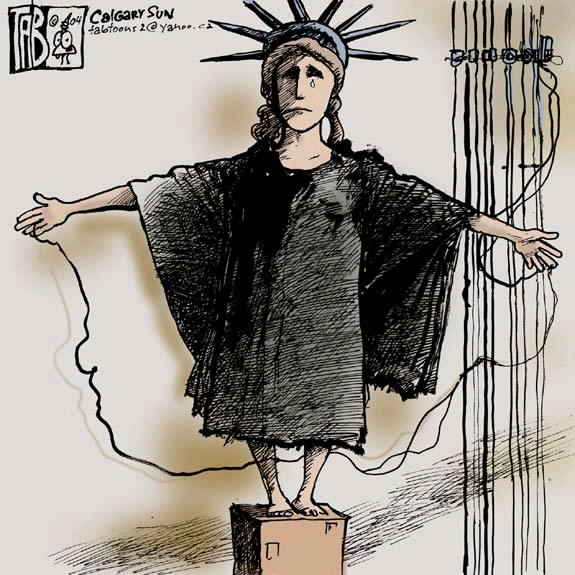
(Thomas Boldt, aka TAB, Abu Ghraib Statue of Liberty Torture Victim, Calgary Sun)
Nov. 28, 30: Human Rights and the Post-9/11 State
For November 28:
Ishay, Human Rights Reader, Part VI, Ch. 14: Micheline Ishay and David Goldfischer: "Human Rights and National Security: A False Dichotomy" (1996).
From Karen J. Greenberg, ed., The Torture Debate in America (NY: Cambridge), 2006:
Introduction (Karen Greenberg), pp. 1-9;
The Issues - Torture: The Road to Abu Ghraib and Beyond (Panel Discussion), pp. 13-32;
Essays (Section One: Democracy, Terror and Torture)
Ch. 1: Liberalism, Torture, and the Ticking Bomb (Luban), pp. 35-83;
Ch. 3: Torture: Thinking about the Unthinkable (McCarthy), pp. 98-110;
Ch. 6: Through a Mirror, Darkly (Horton), pp. 136-150;
Ch. 7: Speaking Law to Power (Bilder and Vagts), pp. 151-161;
Ch. 8: Torture: An Interreligious Debate (Dubensky and Lavery), pp. 162-182.
For November 30:
Essays (Section Two: On the Matter of Failed States...)
Ch. 10: Rethinking the Geneva Conventions (Casey and Rivking, Jr.), pp. 203-213;
Essays (Section Three: On Torture):
Entire section (chs. 13-18), pp. 229-260;
Essays (Section Four: Looking Forward):
Entire section (chs. 19-20), pp. 261-279.
Dec. 5, 7, 12: In class presentations of position papers.
Dec. 5: First group of 4 presents position papers [Your final papers will be due on December 12]*
Dec. 7: Second group of 5 presents position papers [Your final papers will be due on December 14]*
Dec. 12: Third group of 5 presents position papers [Your final papers will be due on Dec. 19]*
Dec. 14: Conclusion: Securing Rights
Jack Donnelly, "Genocide and Humanitarian Intervention," in Universal Human Rights in Theory and Practice, 2nd ed. (Ithaca: Cornell University Press, 2003), pp. 242-260 [ERes and Regular Reserve]
Ishay, Human Rights Reader, Part IV, Ch. 1: Steven Lukes, "Five Fables about Human Rights," and Part VI, Chapters 7-13.
Dec. ?: Class party - my house (date to be determined)
*YOU MAY ASK FOR AN EXTENSION OF YOUR FINAL WRITTEN PROJECT [NOT THE CLASS PRESENTATION] TO ANY DATE AS LONG AS IT IS BEFORE TUESDAY, DECEMBER 19TH AT 2:00 PM.
