Summer 2004
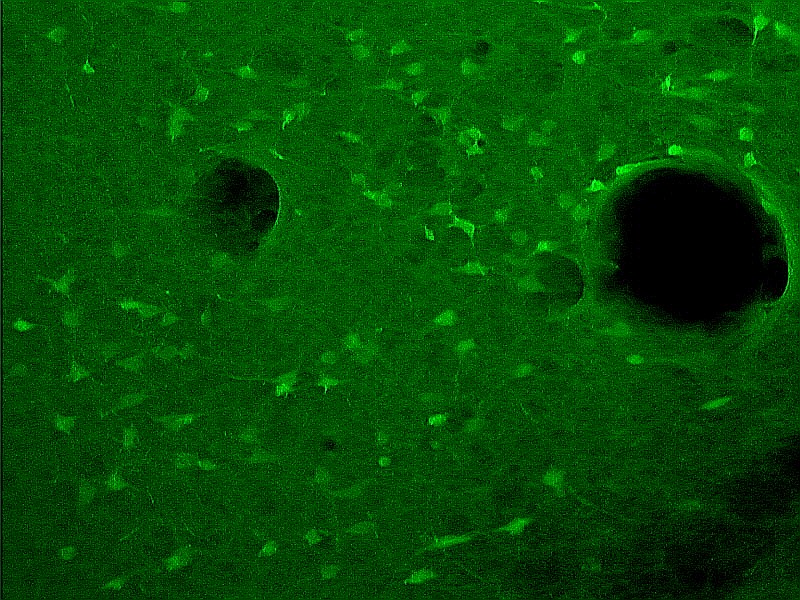
6-OH dompamine injection site in the substantia nigra of a rat, showing degenerating dopamine cells, stained with a polyionic fluorescein stain called Fluor-Jade B.
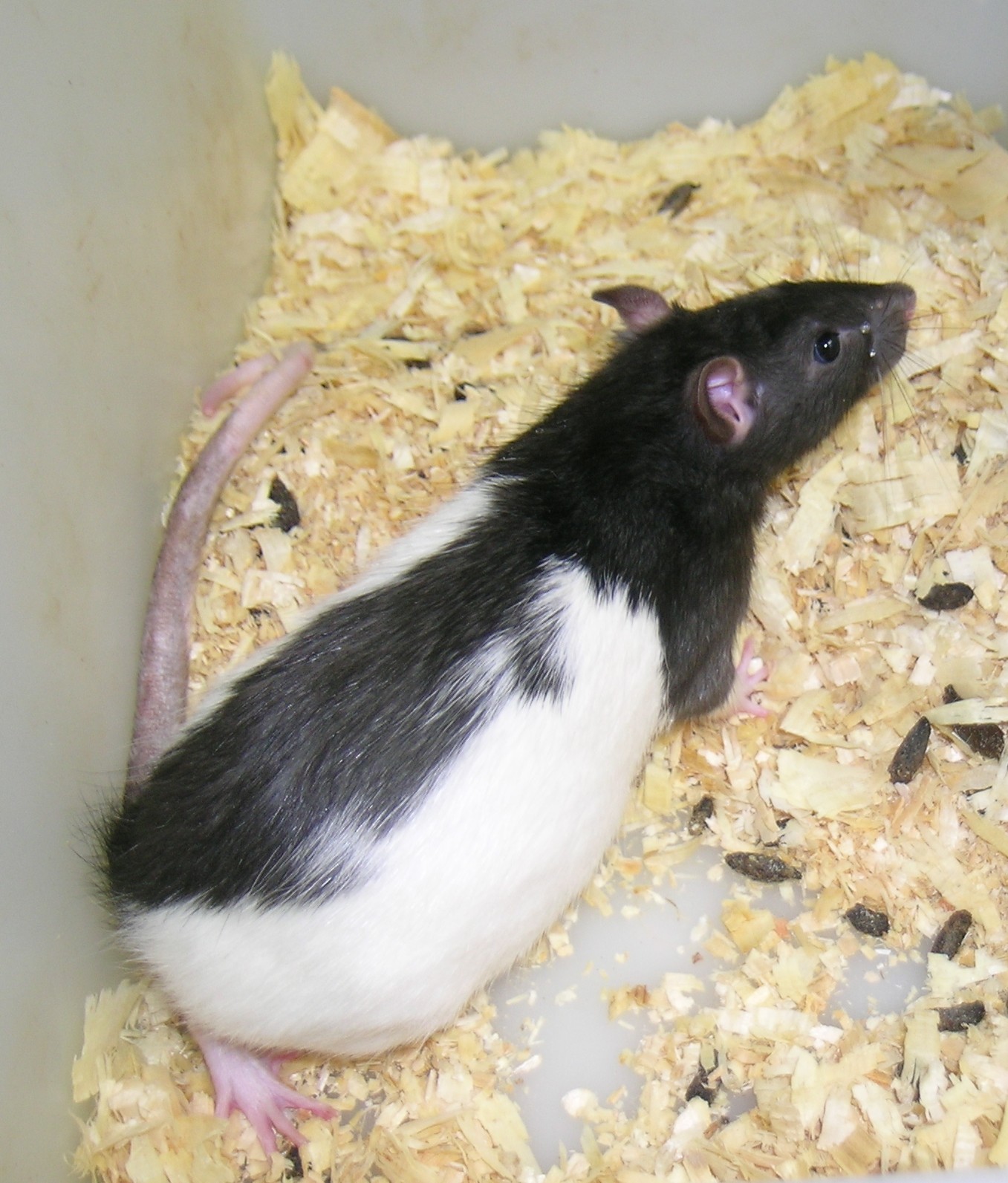
It turns out that clues to the human brain may lie in the whiskers of
a rat. Rats have about 30 large whiskers and dozens of smaller ones. The
whiskers are embedded in hair follicles known as 'blood sinuses' which
pass signals to specific neurons in the brain. Wiskers are 'tuned' to
precise neurons which enable the rat to distinguish various surface textures.
We sought to investigate the rat's ability to distinguish various surface
textures using the T-maze.
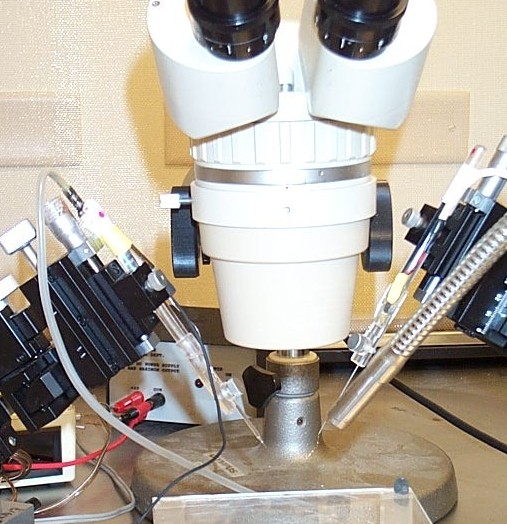
Set-up for voltage clamping of Xenopus eggs to monitor Na+, K+ and Ca++ fluxes.
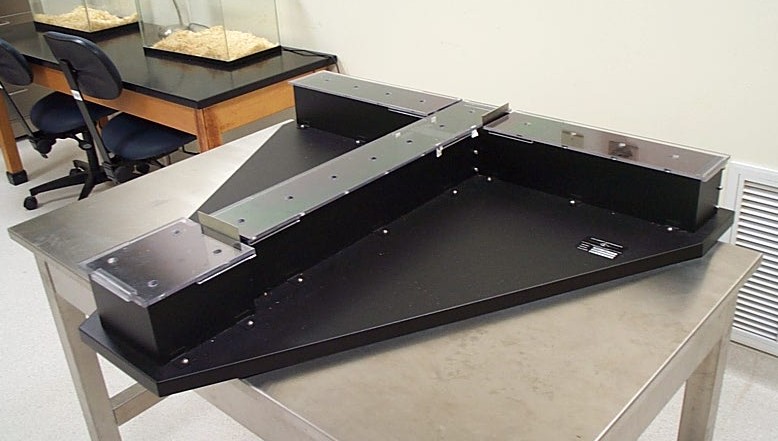
T-maze for the whisker experiment in Long Evans rats.
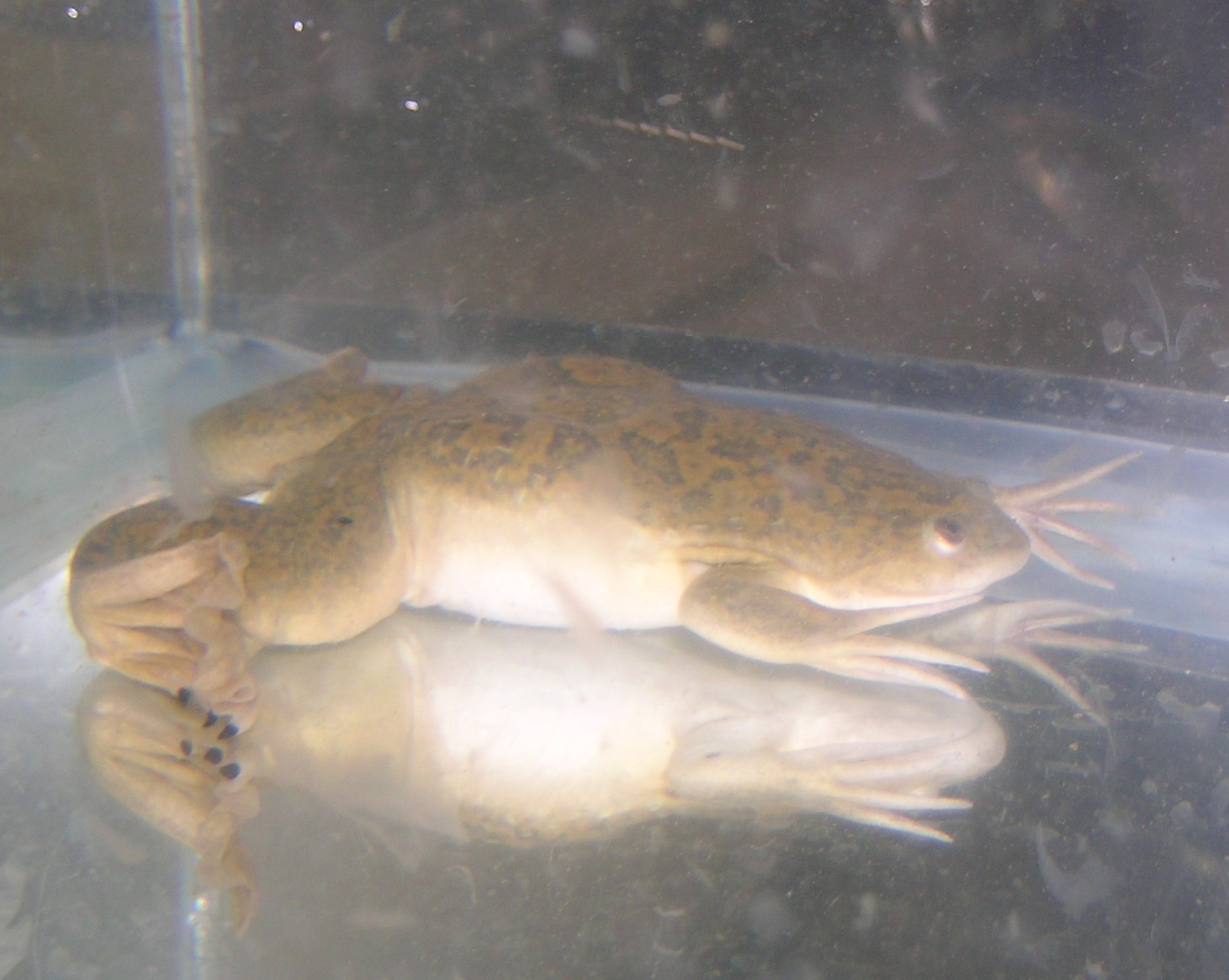
Female Xenopus
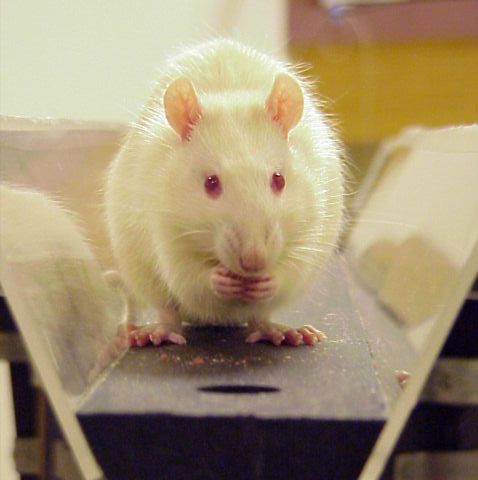
Sprague Dawley rat in the maze