
Ripin Gallery, February 5–July 14, 2019
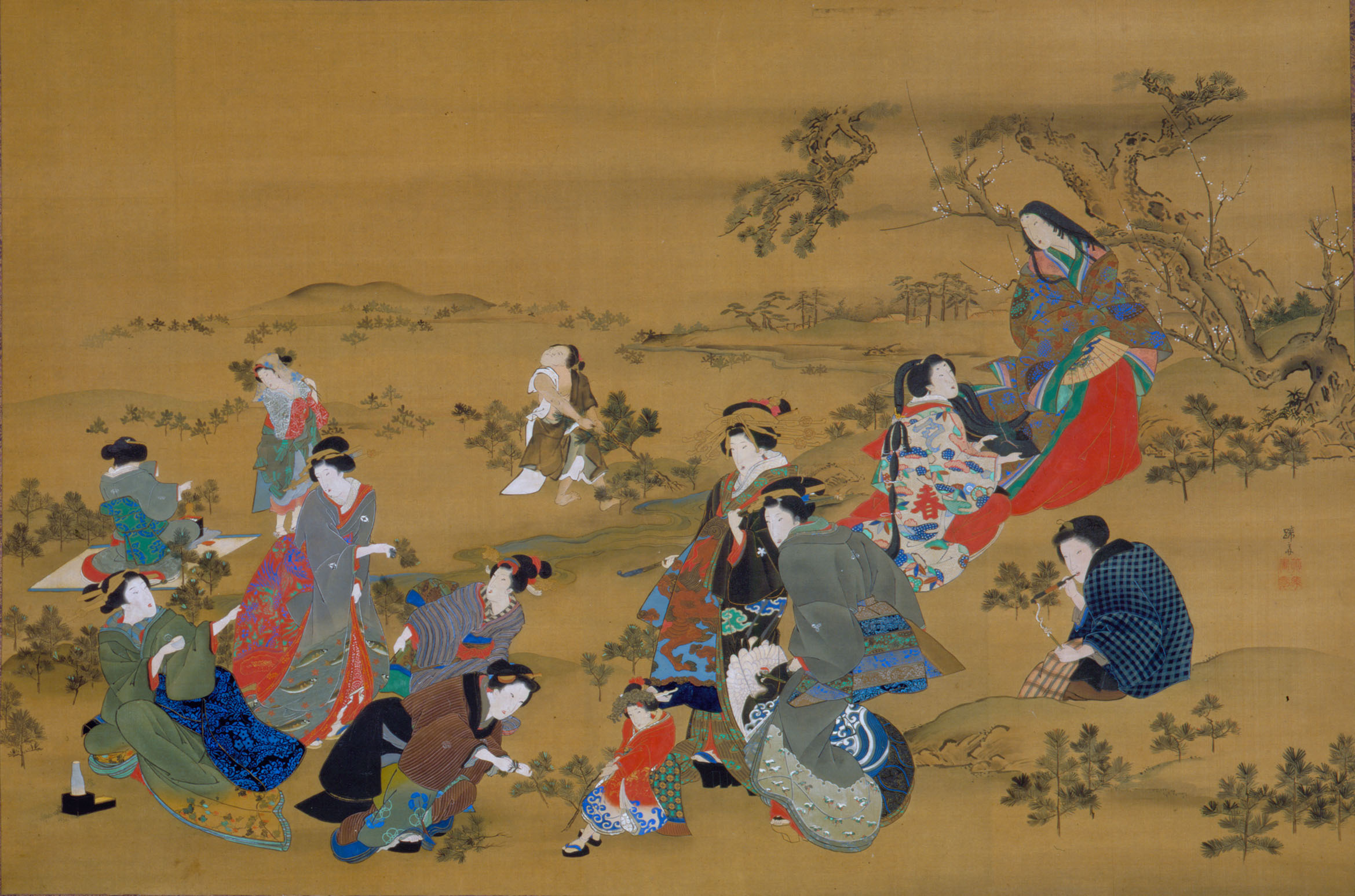
The natural world has provided people in East Asia with inspiration for a rich and varied language of symbols. Among the most popular is a group of three plants, pine, bamboo, and plum—each with its own long-established, auspicious associations. They are known collectively as the Three Friends of Winter (Chinese: Suìhán sān yǒu; Japanese: saikan sanyū), and are associated with the ability to survive adversity and embrace the revitalization that comes with the New Year and spring. This exhibition focuses on some of the many and varied meanings that the Three Friends can have individually.
Even when pine, bamboo, and plum simply set the scene for portraits or narrative scenes, their symbolism underpins any thorough interpretation. Cultivating and displaying the plants, or images of them, traditionally represented wishes to bestow or attract their many virtues. Beyond symbolic meanings are the practical uses of these plants, from construction and craft materials to culinary ingredients and traditional medicines.
Pine
As an evergreen, the pine is a popular symbol of fortitude. It can live for centuries, and therefore represents longevity. Because it grows tall and resists the elements, pine can symbolize moral uprightness and strength.
Bamboo
An extremely versatile and useful member of the grass family, bamboo has built up a wide array of symbolic connotations over the centuries. Its straight, tall stalks link it to moral uprightness, but because it is both an evergreen and can bend in strong winds, it represents endurance through flexibility in adversity. Because the stalks are hollow, bamboo also stands for humility and receptivity, as well as the metaphysical concept of emptiness.
Plum
Famous for its hardiness, and because it is one of the first trees to flower in the spring, the plum tree is often associated with endurance, perseverance, and rejuvenation. In other contexts, the delicate and light colored plum blossoms can also symbolize purity and feminine gracefulness. In China, its five-petaled blossoms further represent the Five Blessings (wǔfú) of longevity, wealth, health, love of virtue, and a peaceful death.
Organized by Kevin R. E. Greenwood, Joan L. Danforth Curator of Asian Art, and Leina Fieleke ’21, curatorial assistant in Asian Art, with Ann Sherif, professor of Japanese at Oberlin College.
Image:
Teisai Hokuba 蹄斎北馬 (Japanese, 1771–1844)
New Year’s Pine Tree Festival, 19th century
Hanging scroll, ink and color on silk
Gift of Charles L. Freer, 1912.14